What's next for Sledge Forest after the county reverses development approval?
Photo Credit: Istock/chameleonseye
Editor’s note: This story was originally published by WilmingtonBiz and has been reformatted for visibility and readability.
A proposed 1,800-home development in Castle Hayne has hit another setback after New Hanover County officials reversed an earlier approval of the project.
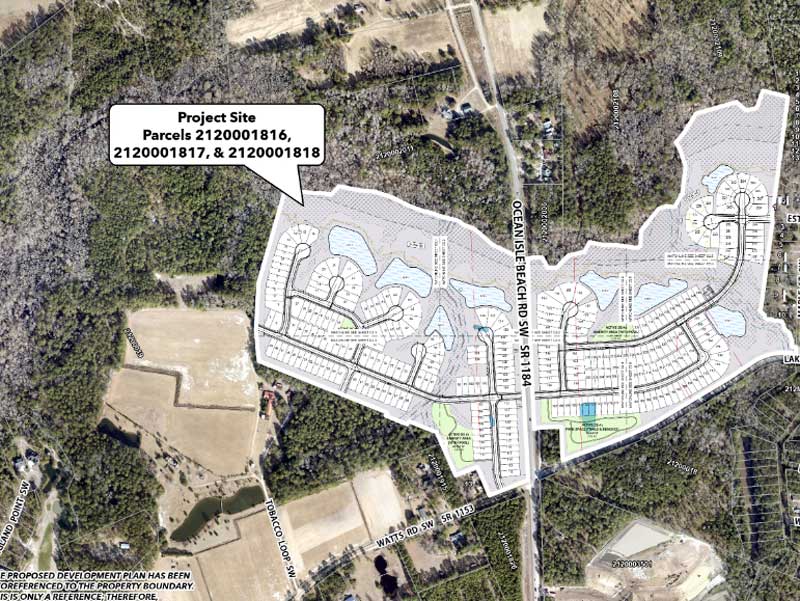
According to WilmingtonBiz, the county's Technical Review Committee (TRC) revoked its conditional approval of the Hilton Bluffs subdivision on Oct. 9, citing significant changes to the development's proposed road access.
The project, proposed by Copper Builders on a portion of the approximately 4,000-acre Sledge Forest property, has faced opposition from residents concerned about traffic, public safety and environmental preservation.
The decision means the previously approved plans are no longer valid, although it does not permanently prevent future development proposals.
Key takeaways
- The bigger picture: New Hanover County has revoked its conditional approval of the proposed 1,800-home Hilton Bluffs development in Castle Hayne.
- The details: Changes to the subdivision's road access left only one entrance and exit, raising public safety concerns.
- Why it matters: The decision is another setback for a major housing project that has drawn community opposition over development and environmental concerns.
- The more you know: Copper Builders would need to submit a new application if it wants to move forward with a revised development plan.
Why did New Hanover County reverse its approval?
The TRC originally granted conditional approval to Hilton Bluffs on March 10, 2026. However, the development's plans changed after two of its three proposed access points were removed.
The revised layout left the subdivision with only one entrance and exit, prompting concerns about emergency access and public safety.
County Manager Chris Coudriet issued an administrative denial of the project in September and requested that the TRC reconsider its earlier approval.
Here's how the decision unfolded:
- March 10: The TRC conditionally approved the Hilton Bluffs subdivision plan.
- August: Developers submitted updated plans after removing two proposed access points.
- September: Coudriet issued an administrative denial, citing public safety concerns.
- Oct. 9: The TRC revoked its previous conditional approval.
According to the county's revocation letter, removing access points at Tall Oaks Drive and Dekker Road represented a substantial change from the original plans.
As a result, the March approval is no longer valid.
What was planned for Sledge Forest?
Copper Builders proposed Hilton Bluffs as a residential development on part of Sledge Forest, a roughly 4,000-acre property in Castle Hayne.
The project was submitted as a by-right development under the property's existing rural agricultural zoning.
The original proposal included:
- 1,800 homes: Planned for the Hilton Bluffs subdivision.
- 4,000 acres: The approximate size of the larger Sledge Forest property.
- 1,000 acres of uplands: The area where development would be concentrated.
- 3,000 acres of wetlands: Roughly three-quarters of the property, which the plans indicated would remain undeveloped.
Copper Builders had previously explored using the county's performance development guidelines to cluster housing on the property's uplands while leaving much of the surrounding land untouched.
The company's founder and CEO, Wade Miller, had previously expressed hopes of beginning construction in 2026 and delivering the first homes in 2027.
Those earlier timelines are now uncertain following the county's decision.
How has the community responded?
The proposed development has faced significant opposition from residents and the community organization Save Sledge Forest.
The group has raised concerns about public safety, environmental protection and the potential impacts of large-scale residential development.
Following the Oct. 9 decision, Save Sledge Forest welcomed the county's action and thanked officials for taking another look at the plans.
In a statement reported by WilmingtonBiz, the organization emphasized the importance of reviewing development proposals when circumstances change and ensuring projects meet county standards.
Some of the group's main concerns have included:
- Protecting public safety and emergency access.
- Preserving the environmental value of Sledge Forest.
- Ensuring development plans receive appropriate county review.
- Considering alternatives that balance growth with conservation.
Copper Builders has previously defended its development approach, stating that it shares some of the community's conservation goals.
Representatives of the company had not provided a response to WilmingtonBiz at the time of the Oct. 9 report.
What happens to the Sledge Forest conservation plans?
Beyond the proposed housing development, Sledge Forest has also been the focus of a major conservation effort.
In June 2026, the N.C. Coastal Land Trust announced an agreement with Copper Builders to permanently preserve more than 3,200 acres of the property if the subdivision plans moved forward.
The proposed conservation area would be larger than Carolina Beach State Park and protect a significant stretch of wetlands, forests and other natural habitats in New Hanover County.
The agreement was described as an important opportunity to preserve one of the county's remaining large natural landscapes.
However, the conservation arrangement was tied to the development moving forward. With the Hilton Bluffs approval revoked, the future of that agreement remains unclear based on the original reporting.
What's next for the Hilton Bluffs development?
The TRC's decision does not mean Sledge Forest can never be developed.
Instead, it means Copper Builders can no longer proceed under the March 2026 conditional approval.
If the company wants to pursue the project, it must submit a new development application that meets the county's requirements and regulations in effect at the time of submission.
For now, the proposed Hilton Bluffs subdivision faces an uncertain path forward as questions remain about road access, future development plans and the conservation agreement.
The decision also highlights the ongoing conversation in New Hanover County about balancing residential growth, infrastructure needs and protection of natural spaces.