What homeowners need to know about Wilmington property taxes before they buy

Photo Credit: Istock/LaylaBird
One of the first questions many newcomers ask after moving to Wilmington is simple: How much will I pay in property taxes?
For many retirees and relocating homeowners, the answer is one of the surprises of living in coastal North Carolina. Compared to states such as New York, New Jersey, Connecticut and Illinois, property taxes in North Carolina are often significantly lower.
Still, understanding how local tax rates, assessments and exemptions work can help homeowners budget more effectively and avoid surprises after closing day.
Key takeaways
- The bigger picture: Many newcomers find North Carolina property taxes lower than what they paid in other parts of the country.
- The details: Property taxes in the Wilmington area are based on your home's assessed value and local county and municipal tax rates.
- Why this matters: Understanding property taxes can help buyers compare communities and estimate their true cost of homeownership.
- The more you know: Tax rates can vary depending on whether you live in New Hanover, Brunswick or Pender counties.
How property taxes work in North Carolina
Unlike income taxes, property taxes are collected locally rather than by the state.
Each county is responsible for:
- Assessing property values
- Sending tax bills
- Collecting payments
- Administering certain tax relief programs
Your annual tax bill is based on two primary factors: Your property's assessed value and your local tax rate.
The basic formula:
Assessed Property Value ÷ 100 × Tax Rate = Annual Property Tax Bill
For example:
- Home value: $500,000
- New Hanover County tax rate: $0.306 per $100 of value
- Estimated county property tax: about $1,530 per year
Depending on where you live, municipal taxes may be added to the county tax bill.
What is “assessed value”?
An assessed value is the value your county assigns to your property for tax purposes.
While assessed values are often similar to market values, they aren't always identical. Counties periodically conduct revaluations to reflect changes in the real estate market.
As home values rise throughout coastal North Carolina, assessments can increase as well, which may result in higher property tax bills.
Property taxes by county: What Wilmington-area homeowners should know
One reason property taxes can feel confusing is that the Wilmington region spans multiple counties.
New Hanover County
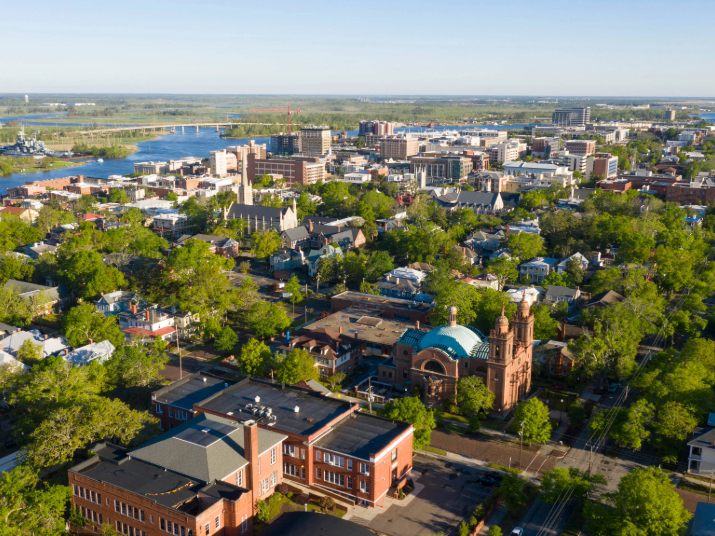
New Hanover County is home to Wilmington, Wrightsville Beach, Carolina Beach, Kure Beach and several surrounding neighborhoods.
For many residents, proximity to healthcare, shopping, dining and cultural attractions makes New Hanover County attractive despite generally higher home prices. Homeowners living inside Wilmington city limits may pay both county and city property taxes.
Brunswick County
Brunswick County includes many of the area's fastest-growing communities, including:
- Leland
- Southport
- Oak Island
- St. James
- Shallotte
Many retirees choose Brunswick County because it offers easy access to Wilmington while often providing newer housing options and active-adult communities. Property taxes are administered by Brunswick County, and rates may differ from neighboring counties.
Pender County
Pender County includes communities such as:
- Hampstead
- Surf City
- Topsail Beach
The county continues to attract residents seeking more space, access to the coast and a quieter pace of life while remaining within commuting distance of Wilmington. As with Brunswick and New Hanover counties, property taxes are assessed and collected locally.
Why retirees pay close attention to property taxes
Property taxes often become more important during retirement planning. Many retirees are living on fixed incomes and want predictable housing expenses. That's one reason North Carolina continues to attract retirees from higher-tax states.
When comparing communities, retirees often consider:
- Annual property tax bills
- Homeowners association fees
- Insurance costs
- Maintenance expenses
- Access to healthcare
For many newcomers, lower property taxes help offset other coastal living expenses such as homeowners insurance or flood insurance.
Property tax relief programs for older adults
North Carolina offers several property tax relief programs for qualifying homeowners.
Some programs are available to residents who are:
- Age 65 or older
- Totally and permanently disabled
- Within certain income limits
These programs can reduce the taxable value of a home and potentially lower annual property tax bills. Homeowners should contact their local county tax office to determine current eligibility requirements.
What do property taxes pay for?
Property taxes help fund many local services residents rely on every day.
Tax dollars typically support:
- Public schools
- Sheriff's offices and law enforcement
- Fire and emergency services
- Parks and recreation facilities
- Libraries
- Road and infrastructure improvements
- Local government operations
The exact allocation varies by county and municipality.
The bottom line
For many people relocating to the Wilmington area, property taxes are one of the more pleasant surprises of homeownership in coastal North Carolina.
While tax rates and assessments vary by community, homeowners often find their annual tax bills lower than what they paid in many Northeastern and Midwestern states.
Whether you're considering Wilmington, Leland, Hampstead or one of the region's beach communities, understanding how property taxes work can help you make a more informed decision about where to call home.
FAQs
Are property taxes high in Wilmington?
Compared to many parts of the Northeast and Midwest, Wilmington-area property taxes are generally considered relatively low. However, the exact amount depends on your home's assessed value and local tax rates.
Do Wilmington residents pay both city and county taxes?
Homeowners who live within Wilmington city limits may pay both New Hanover County and City of Wilmington property taxes.
Which county has lower property taxes: New Hanover, Brunswick or Pender?
Tax rates can change annually and vary by municipality. Homebuyers should review current county and municipal tax rates before purchasing a home.
Do retirees receive property tax breaks in North Carolina?
Some retirees may qualify for property tax relief programs based on age, disability status and income.
How can I estimate my future property tax bill?
A good starting point is to multiply your home's assessed value by the applicable county and municipal tax rates. Your local tax office can help provide more precise estimates.