Wrightsville Beach bridge project could wrap up two years early
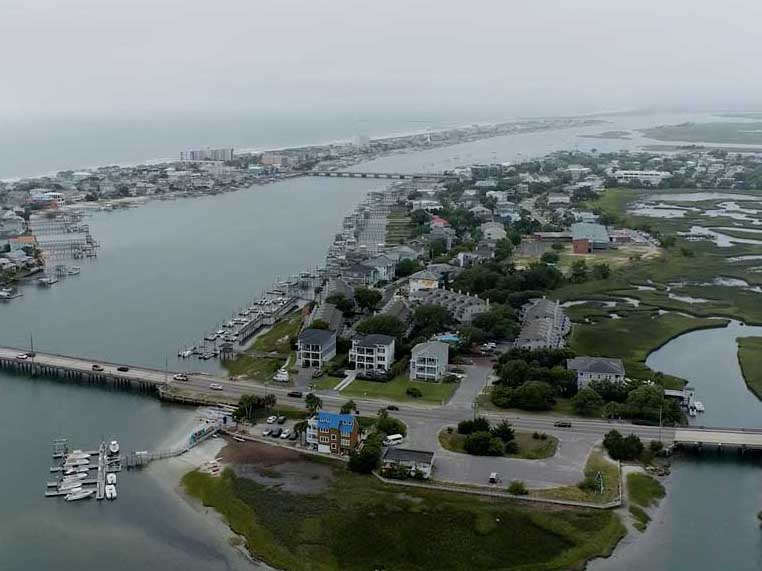
(Photo courtesy: NCDOT)
Editor’s note: This story was originally published by WilmingtonBiz and has been reformatted for visibility and readability.
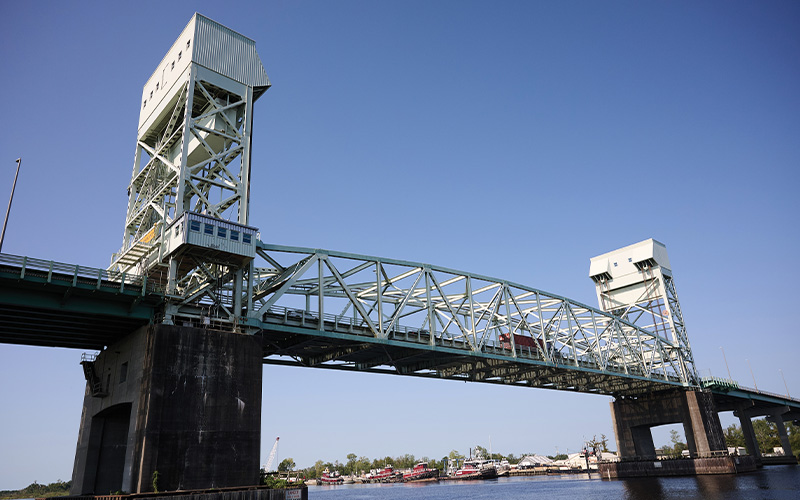
Wrightsville Beach’s three-bridge replacement project could be completed two years earlier than originally expected.
The $105 million project is currently targeted for completion by spring 2030 instead of 2032 after the N.C. Department of Transportation opted for a construction manager/general contractor method that allows some phases of work to move forward at the same time.
The project includes replacing three bridges on Wrightsville Beach, with construction planned in phases and traffic access maintained throughout the work.
Key takeaways
- The bigger picture: NCDOT is targeting spring 2030 for completion of Wrightsville Beach’s three-bridge replacement project, two years earlier than originally projected.
- The details: The $105 million project includes bridges over Lees Cut and Banks Channel on West Salisbury Street and the Causeway Drive bridge over Banks Channel.
- Why it matters: NCDOT plans to maintain traffic and beach access during construction while adding bike lanes and a protected pedestrian and multi-use path to the new bridges.
- The more you know: The spring 2030 completion date is a target and could change depending on construction progress.
Why the project could finish sooner
During an Aug. 14 press conference, Trevor Carroll, Division 3 Engineer for NCDOT, said the department’s use of a construction manager/general contractor, or CM/GC, delivery method could accelerate the project.
The collaborative approach allows for earlier cooperation between design and contracting teams.
The original schedule stretched about six years, with plans to complete roughly one bridge every two years. Under the new approach:
- Phase 2 could be advanced by 12 months.
- Phase 3 could be advanced by 24 months.
- Work on the Banks Channel and Causeway bridges could take place at the same time.
- The contractor proposed using separate crews for the two bridges.
“We have the opportunity with the CM/GC delivery to accelerate phases two and three, and ultimately have an idea to complete the overall project by spring of 2030,” Carroll said.
He emphasized that 2030 remains a target and could change depending on construction progress.
What the $105 million project includes
Balfour Beatty Infrastructure was awarded the contract for the project, which will replace:
- The Causeway Drive bridge crossing Banks Channel.
- The West Salisbury Street bridge crossing Lees Cut.
- The West Salisbury Street bridge crossing Banks Channel.
The drawbridge is not included in the replacement project. NCDOT is working with the Coast Guard to reduce drawbridge openings during construction on the other bridges, Carroll said.
“We see this as an investment in the community for decades to come,” Carroll said.
New bridges will add space for bikes and pedestrians
The replacement bridges will include wider multimodal lanes, including dedicated bike lanes and a protected 12-foot pedestrian path.
The Causeway Drive bridge will have:
- Four travel lanes.
- A bike lane in each direction.
- A 12-foot multi-use path.
The West Salisbury Street bridges will have:
- One travel lane in each direction.
- Two bike lanes.
- A 12-foot multi-use path.
How traffic will work during construction
NCDOT has committed to maintaining two lanes of traffic on Causeway Drive throughout construction to preserve traffic flow and access to the beach.
Because the new Causeway bridge will be built next to the existing bridge, vehicles will continue using Causeway Drive while construction is underway.
Once part of the new Causeway bridge is completed, traffic will shift onto the new portion so the old bridge can be demolished.
NCDOT will also coordinate with local emergency services to maintain access throughout the project.
Phase 1: Lees Cut bridge
Construction of the bridge crossing Lees Cut will require closing West Salisbury Street from Lookout Harbor to the eastern entrance to Pelican Drive.
Two lanes in each direction will remain open on Causeway Drive.
Drilling operations and utility relocation had already begun as of the original WilmingtonBiz report, with construction on the West Salisbury Street bridge over Lees Cut planned to begin in late 2026. The bridge was not expected to close to traffic until after Labor Day.
Phase 2: Banks Channel bridge
Phase 2 is expected to begin in summer 2027.
Construction will require closing West Salisbury Street from Lookout Harbor to North Lumina Avenue, although parking will remain open on West Salisbury Street.
The new bridge will be built north of the existing bridge at the same time. Two lanes in each direction will remain open on Causeway Drive.
Phase 3: Causeway Drive bridge
Phase 3 is expected to begin in late 2028.
During this phase, traffic will shift onto new lanes on Causeway Drive. One lane in each direction on Causeway Drive and one lane in each direction on Salisbury Street will remain open.
The multi-use path on Causeway Drive will remain open during all phases of construction.
What about the Eastwood Road and Military Cutoff project?
Carroll also addressed concerns about construction overlapping with the Eastwood Road and Military Cutoff overpass project.
Most lane closures associated with that project are planned for nighttime, he said.
“We want to be clear: These projects are two miles apart,” Carroll said. “These project limits and the traffic control disturbances will not overlap, but that doesn't mean that someone isn't going to drive through both of these construction projects on the way to the beach. We realize that, we recognize that, we've heard that, and we're listening.”
Why NCDOT is trying a different approach
The General Assembly allowed NCDOT to explore pilot projects using an alternative delivery method, and NCDOT approved the CM/GC method for the Wrightsville Beach bridge replacement project.
“We're grateful to have an opportunity to be one of those pilot projects, and it is our goal to make sure that this delivery method is successful,” Carroll said, “so that we can expand this into more projects in the future.”